Are low carbon (footprint) homes becoming more common, is greener buildingbecoming ‘the norm’?Here is some information about building and retrofitting green energy into yourhome.For some

Dated: April 8 2025
Views: 412
Are low carbon (footprint) homes becoming more common, is greener building
becoming ‘the norm’?
Here is some information about building and retrofitting green energy into your
home.
For some homeowners, a low carbon home is already a priority.
Do you envy your neighbours solar panels? For those who may have not yet taken
advantage of government incentives, don’t wait too long. There may be shifting
priorities in government spending. Take advantage of current rebates on EV
chargers, solar panels and upgrading your heating system to a heat
pump and upgrading insulation and windows. Rebates are all available from BC
Hydro through provincial funding, offering rebates up to $5,000 on eligible grid-
connected solar panels and up to an additional $5,000 for battery storage systems
to qualifying residential customers. The BC HYDRO website is very easy to use.
Last week I received a $600 rebate for an EV charger installed at my home!
“Rebates for (electricity) self-generation are one of the ways that we're
helping to meet the province's growing need for renewable electricity and
providing owners with more options for managing their energy use.”
Before you renovate, check out the incentives that will inch your home closer to a
lower carbon footprint and ultimately a passive home.
https://www.betterhomesbc.ca/rebates/energy-savings-program/
Passive homes ( low carbon footprint homes) have been built mostly in Europe, but
are catching on in Canada.
"Passive homes aim to achieve the highest level of energy efficiency and climate-
consciousness possible by designing the home's function and style based on its
geographical location, solar orientation, and climatic region. High-efficiency
heating and cooling systems, as well as heat recovery ventilation (HRV) systems,
are incorporated, to further reduce the amount of energy needed to heat and cool
the home. Passive houses consume up to 90 percent less heating and cooling
energy than conventional buildings. Renewable energy systems such as solar
photovoltaic (solar panels) are often installed so that the building generates all of
its energy needs. With all of these features, passive houses produce little to no
greenhouse gas (GHG) emissions, making them sustainable and climate-friendly."
●
Canadian Federal government has recently implemented“The Canada Green Buildings Strategy: Transforming Canada’s buildings
sector for a net-zero and resilient future.
The Canadian Net-Zero Emissions Accountability Act enshrines in legislation the
Government of Canada’s commitment to reduce GHG emissions by 40-45% below
2005 levels by 2030 and to achieve net-zero emissions by 2050. Buildings
account for 18% of Canada’s emissions.”
The CGBS centers around three priorities: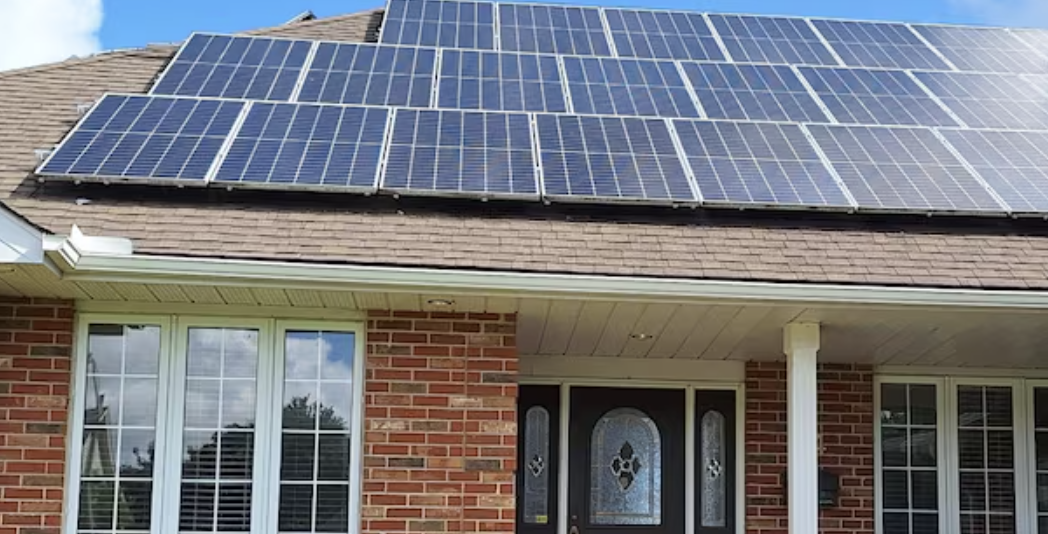
Accelerate retrofits
Build green and affordable from the start
Shape the buildings sector of the future.
Check https://natural-resources.canada.ca/energy-efficiency/home-energy-
For the affordability program and more information.

Hello, I'm Vida Glaser B.Sc REALTOR, a dedicated and experienced real estate agent serving Southern Vancouver Island. With a passion for helping clients find their perfect home, investment or commerci....
Are low carbon (footprint) homes becoming more common, is greener buildingbecoming ‘the norm’?Here is some information about building and retrofitting green energy into yourhome.For some
 Data provided by: Victoria Real Estate Board 3035 Nanaimo Street, Victoria, British Columbia V8T 4W2
All information displayed is believed to be accurate but is not guaranteed and should be independently verified. No warranties or representations are made of any kind.
The trademarks REALTOR®, REALTORS® and the REALTOR® logo are controlled by The Canadian Real Estate Association (CREA) and identify real estate professionals who are members of CREA. The trademarks MLS®, Multiple Listing
Service® and the associated logos are owned by CREA and identify the quality of services provided by real estate professionals who are members of CREA. Used under license.
Show More...
Data provided by: Victoria Real Estate Board 3035 Nanaimo Street, Victoria, British Columbia V8T 4W2
All information displayed is believed to be accurate but is not guaranteed and should be independently verified. No warranties or representations are made of any kind.
The trademarks REALTOR®, REALTORS® and the REALTOR® logo are controlled by The Canadian Real Estate Association (CREA) and identify real estate professionals who are members of CREA. The trademarks MLS®, Multiple Listing
Service® and the associated logos are owned by CREA and identify the quality of services provided by real estate professionals who are members of CREA. Used under license.
Show More...
 Information should be deemed reliable but not guaranteed, all representations are approximate, and individual verification is recommended. Copyright ©2026 All rights reserved.
The trademarks REALTOR®, REALTORS® and the REALTOR® logo are controlled by The Canadian Real Estate Association (CREA) and identify real estate professionals who are members of CREA. The trademarks MLS®, Multiple Listing Service® and the associated logos are owned by CREA and identify the quality of services
provided by real estate professionals who are members of CREA. Used under license.
Show More...
Information should be deemed reliable but not guaranteed, all representations are approximate, and individual verification is recommended. Copyright ©2026 All rights reserved.
The trademarks REALTOR®, REALTORS® and the REALTOR® logo are controlled by The Canadian Real Estate Association (CREA) and identify real estate professionals who are members of CREA. The trademarks MLS®, Multiple Listing Service® and the associated logos are owned by CREA and identify the quality of services
provided by real estate professionals who are members of CREA. Used under license.
Show More...
 All information deemed reliable but not guaranteed. All properties are subject to prior sale, change or withdrawal. Neither listing broker(s) or information provider(s) shall be responsible for any typographical errors, misinformation, misprints and shall be held totally harmless. Listing(s) information is provided for consumer's personal, non-commercial use and may not be used for any purpose other than to identify prospective properties consumers may be interested in purchasing. The data relating
to real estate for sale on this website comes in part from the Internet Data Exchange program of the Multiple Listing Service. Real estate listings held by brokerage firms other than Pemberton Holmes - Victoria may be marked with the Internet Data Exchange logo and detailed information about those properties will include the name of the listing broker(s) when required by the MLS. Copyright ©2026 All rights reserved.
Last Updated: September 21, 2026 3:38 AM UTC
Show More...
All information deemed reliable but not guaranteed. All properties are subject to prior sale, change or withdrawal. Neither listing broker(s) or information provider(s) shall be responsible for any typographical errors, misinformation, misprints and shall be held totally harmless. Listing(s) information is provided for consumer's personal, non-commercial use and may not be used for any purpose other than to identify prospective properties consumers may be interested in purchasing. The data relating
to real estate for sale on this website comes in part from the Internet Data Exchange program of the Multiple Listing Service. Real estate listings held by brokerage firms other than Pemberton Holmes - Victoria may be marked with the Internet Data Exchange logo and detailed information about those properties will include the name of the listing broker(s) when required by the MLS. Copyright ©2026 All rights reserved.
Last Updated: September 21, 2026 3:38 AM UTC
Show More...